Bringing Green Spaces to Life: The Gardening Flat Design Set
There’s a specific kind of calm that comes with a well-designed garden, and translating that feeling into digital projects is a common goal for designers and entrepreneurs alike. We often struggle to find assets that feel organic without looking messy or overly complex. That is why I was so drawn to the Gardening Flat Design Illustrations Set. It captures the essence of horticulture through a clean, modern lens, making it a versatile tool for anyone in the creative space. Thank you for visiting this account to check out this collection; it is genuinely one of those assets that solves a multitude of visual problems.
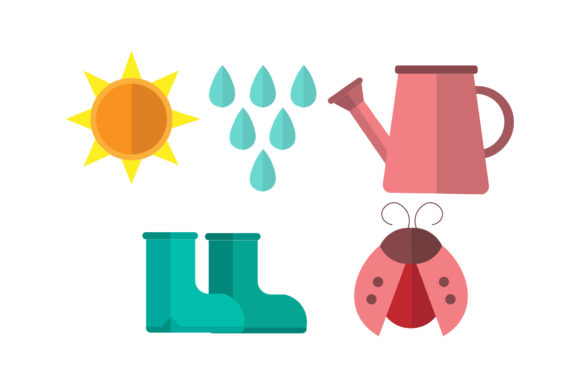
Visually, this set relies on the principles of modern typography and vector art—minimalism and clarity. You won’t find photorealistic textures or noisy backgrounds here. Instead, the style is defined by bold, flat colors and simplified geometric shapes that suggest the form of plants, tools, and outdoor elements. It has a friendly, approachable personality. It doesn’t scream for attention with gradients or drop shadows; rather, it invites the viewer in with a soft, harmonious color palette. For anyone working on brand identity for a wellness blog, a sustainable product, or a local nursery, this aesthetic conveys a sense of organization and care. It feels professional yet accessible, bridging the gap between technical web design and the warmth of nature.
Practical Applications Across Industries
One of the strongest aspects of this collection is its adaptability. Because the illustrations are provided in 6 format types—AI, EPS, SVG, DXF, JPG, and PNG—you aren't limited to just one medium. This is crucial for the modern creative who might be working on a logo design in the morning and preparing packaging design files in the afternoon.
For digital creators, the SVG and PNG files are lifesavers. If you are building a landing page, you can scale these vectors infinitely without losing quality, ensuring your site loads quickly and looks sharp on Retina screens. They work beautifully as hero images, section dividers, or icons for a blog sidebar. In the realm of social media graphics, where attention spans are short, these flat illustrations serve as excellent focal points. They are distinct enough to stop the scroll but simple enough not to clutter a text-heavy Instagram post or a Pinterest pin.
On the print side, the utility is just as strong. The DXF file inclusion is a massive bonus for crafters and hobbyists. If you use a Cricut or Silhouette machine, you can use these files to create custom decals, stencils for garden markers, or vinyl stickers for laptops and water bottles. For small business owners, imagine using these illustrations for editorial design—a seasonal menu for a farm-to-table restaurant or the layout of a community newsletter. The canvas size of 1920 px x 1280 px is optimized for landscape formats, making them perfect for headers and banners.
Integrating Flat Art with Typography
A common pitfall in design is pairing a strong illustration style with a typeface that fights for attention. When using the Gardening Flat Design Illustrations Set, the goal is balance. Because the illustrations are clean and geometric, you have the freedom to play with different text styles, but some pairings work better than others.
I find that sans serif fonts are the natural companion here. A clean sans serif mirrors the vector lines of the illustrations, creating a cohesive, modern typography look. This is ideal for tech startups focusing on AgTech or eco-friendly apps. However, if you want to soften the brand and make it feel more artisanal, consider pairing the illustrations with a handwritten font or a script font. This creates a lovely contrast—the precision of the digital illustration against the organic flow of the handwriting. This combination works wonders for Etsy shop headers or wedding invitations with a botanical theme.
Conversely, using a heavy serif font can ground the design, giving it a more established, editorial feel suitable for magazine covers or book layouts. The key is to let the illustrations breathe. Don’t crowd them with too much text. Use them to support your visual hierarchy, guiding the reader’s eye from the image to your headline, and finally to the body copy.
Technical Flexibility and Editing
For the designer who likes to tinker, the availability of AI and EPS files is a game-changer. While the illustrations are ready to use out of the box, the ability to edit them as needed provides infinite longevity for the asset. You might love the shape of a watering can in the set, but perhaps it doesn't match your client's specific brand color palette. With these vector formats, you can ungroup the elements, tweak the hues, or even combine parts of different illustrations to create a completely new scene.
This level of customization elevates the set from a simple clipart collection to a robust design asset library. It ensures that your final output doesn't look like it came from a stock site. When you customize the colors to match your brand identity, the illustrations become proprietary to your project. This is vital for building recognition and consistency. Whether you are designing a series of e-books or a set of physical merchandise, having that source code allows you to maintain a unified aesthetic across all touchpoints.
Maximizing Your Investment
When you download a resource like this, it is worth taking the time to audit how it fits into your broader workflow. If you are a content creator, consider how these images can streamline your production. Instead of searching for stock photos every time you write a post about gardening, wellness, or lifestyle, you have a consistent visual library ready to go. This consistency is a cornerstone of professional editorial design. It tells your audience that you are organized and intentional.
For those in the crafting community, the value lies in the specificity of the DXF and SVG cuts. The flat design style translates exceptionally well to physical materials because there are no complex gradients to worry about during the cutting process. The lines are clean, ensuring a smooth cut every time.
Ultimately, the Gardening Flat Design Illustrations Set is more than just a collection of pictures; it is a toolkit for visual communication. It bridges the gap between the digital and physical worlds, offering high-quality assets for web design, print, and crafting. By leveraging the various file formats and pairing them with the right typography, you can create premium designs that resonate with your audience, whether they are browsing a website, reading a brochure, or applying a sticker to their garden journal.