Halloween Moon Witch Bat Illustrations: A Designer's Toolkit
As the autumn chill sets in and the nights grow longer, a specific visual language takes over. It’s a blend of eerie elegance, whimsical spookiness, and timeless mystery. For designers, marketers, and creators, capturing this seasonal mood effectively is a common challenge. This is where a well-crafted asset like the Halloween Moon Witch Bat Illustrations collection comes into play. It’s more than just a set of spooky graphics; it’s a versatile design toolkit built for real-world projects, offering a consistent aesthetic that can elevate everything from social media campaigns to product packaging.
Understanding the Visual Character and Style
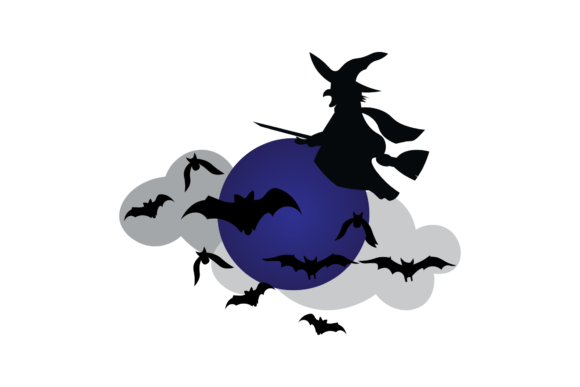
At its core, this illustration set presents a cohesive narrative centered around classic Halloween iconography. The focal points—a witch silhouette against a luminous moon, accompanied by bats in flight—are rendered in a style that balances detail with graphic clarity. The personality is unmistakably Halloween: it carries a sense of nocturnal magic and gentle foreboding without tipping into overly grim or childish territory. The line work is confident, the compositions are balanced, and the overall appeal lies in its ability to be both instantly recognizable and adaptable to different design contexts.
The style leans towards a modern illustration approach, avoiding excessive texture or photorealism. This makes it particularly strong for applications where scalability and clean reproduction are key. Whether used as a bold hero image or a subtle repeating pattern, the designs maintain their integrity. The aesthetic feels professional and polished, suitable for brands that want to acknowledge the holiday with sophistication rather than relying on cheap, garish tropes. It’s a creative font for the eyes, speaking a visual dialect that resonates with a broad audience.
Practical Applications Across Creative Projects
The true value of any design asset is measured by its utility. The Halloween Moon Witch Bat Illustrations are delivered in a comprehensive suite of formats—AI, EPS, SVG, DXF, JPG, and PNG—each serving a distinct purpose. The vector formats (AI, EPS, SVG) are indispensable for projects requiring infinite scalability, such as large-format printing for event signage, detailed logo design elements, or intricate vinyl cutting for crafters. The raster formats (JPG, PNG) are ready-to-use for digital applications, with the PNG files featuring transparency for seamless layering in photo editing software or web design projects.
Consider the breadth of projects this collection can serve. A small business owner could use a witch silhouette from the set to create a distinctive brand identity for a seasonal product launch, ensuring their packaging design stands out on the shelf. A content creator or blogger can integrate these illustrations into their social media graphics and blog headers to create a consistent, engaging visual theme throughout October. For entrepreneurs in the craft space, the DXF files open up possibilities for custom decals, stencils, and apparel designs. The consistent canvas size of 1920px by 1280px provides a perfect starting point for digital presentations, website banners, and video thumbnails, ensuring a professional look right out of the box.
Integrating Illustrations for Impactful Design
Effective design is about more than just placing a pretty picture. It’s about using visual elements to guide the viewer’s eye, establish hierarchy, and communicate a message. The Halloween Moon Witch Bat Illustrations can be leveraged to achieve several key design goals. Used as a central motif, a witch-and-moon composition can serve as a powerful focal point in editorial design or a poster, immediately setting the tone. The bat elements, when used as repeated patterns or subtle accents, can add depth and movement to a layout without overwhelming the primary content.
From a brand perception standpoint, incorporating these high-quality illustrations signals attention to detail and seasonal relevance. It helps build recognition; customers will begin to associate that specific visual style with your brand’s Halloween offerings. For readability, it’s crucial to use these illustrations thoughtfully. A detailed scene works best as a background with ample negative space or a semi-transparent overlay, ensuring that any overlaid text remains legible. Pairing these illustrations with clean, modern typography—perhaps a strong sans serif font for headlines and a readable serif font for body copy—creates a balanced and professional visual hierarchy.
Making the Right Choice for Your Project
When evaluating whether this illustration set fits your needs, start by examining the included files. Open the AI or EPS file in a vector program to inspect the layers and editability. Check the PNGs to see how the transparency is handled. Test the JPGs for their color fidelity on your screen. This hands-on review is part of the guarantee of ease of use; you can truly see how the design works before committing it to a final project.
Think about font pairing and overall design cohesion. The illustrative style here is moderately detailed and graphic. It would pair well with typefaces that don’t compete for visual attention. A clean, geometric sans serif font would complement the modern illustration style, while a classic serif font could add a touch of traditional elegance. Avoid overly ornate script or handwritten fonts that might clash with the illustration’s line work. The goal is a harmonious relationship between image and text.
Finally, consider the commercial licensing. For designers and businesses, clarity on usage rights is non-negotiable. This collection is marketed as a commercial font, meaning it’s intended for projects where you or your client will generate revenue. This covers a wide range of applications, from the logo and brand identity materials for a Halloween pop-up shop to the social media graphics for a marketing campaign. The assurance that the design is easy to use and editable provides the flexibility needed to adapt it to each unique project’s requirements, making it a reliable asset in your seasonal design toolkit.